

Why Travel Writers Have To Accept Press Perks and "Freebies"
A recent New York Times essay has sparked a bigger conversation about press trips, access, and the hidden economics of who gets to tell travel stories at all.

TODAY’S NEWSLETTER INCLUDES:
Big news from Airbnb, a new robot airport lounge at MSP, the summer of Americana is here.
And five travel stories I’m slightly obsessed with this week.
Happy Tuesday! How was your MDW?
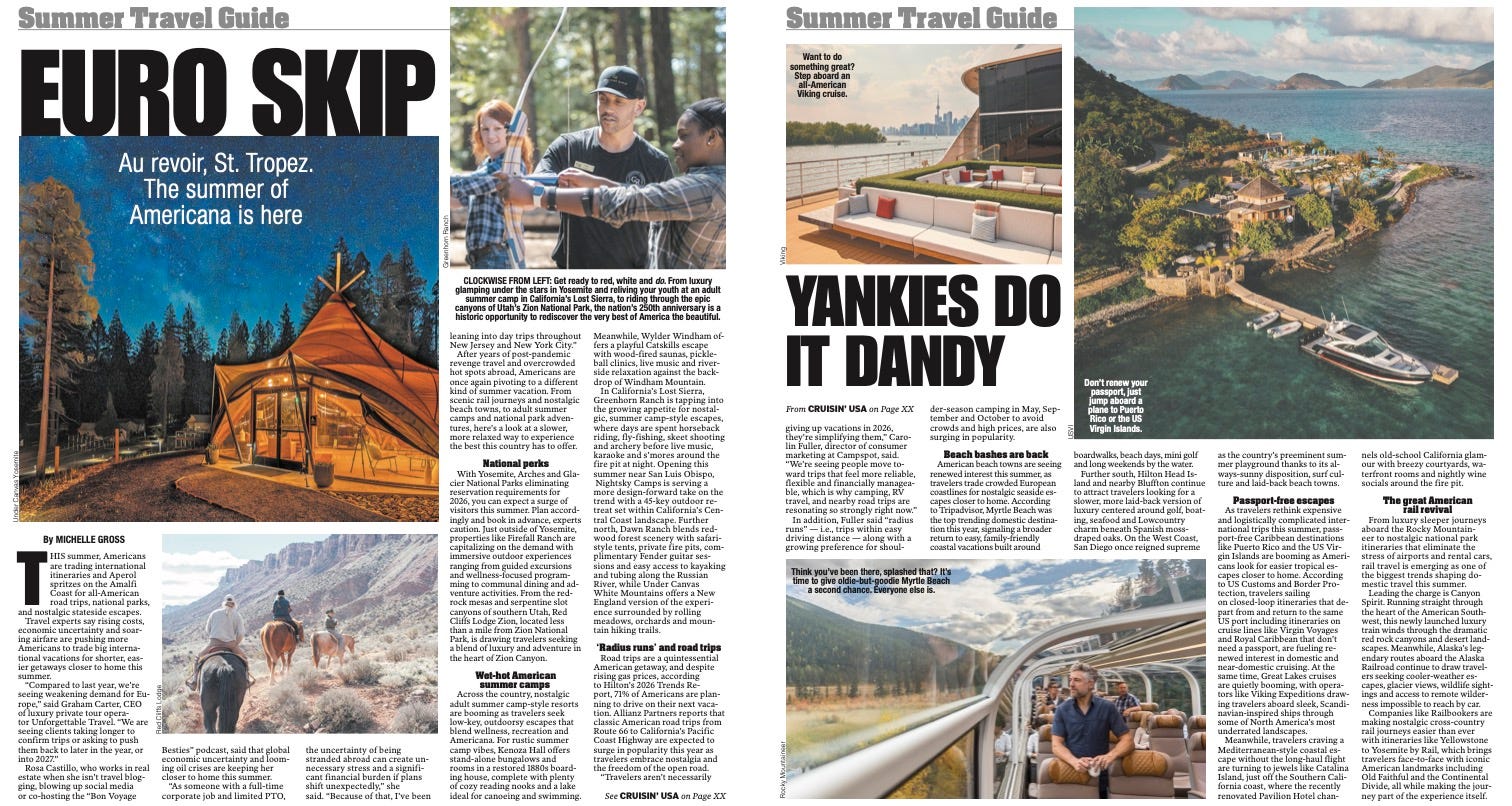
It’s the unofficial start of summer, and I don’t know about you, but I’m starting to feel the pull of getting outside and exploring someplace new. If you're looking for some close-to-home inspo, my latest piece for the New York Post is packed with ideas for domestic road trips, rail adventures, and more.
This week, I’m sharing some thoughts on a recent NYT essay, Why Our Travel Writers Turn Down Press Perks and Freebies which has been making the rounds since it ran a few days ago. I have some thoughts on it, which I’ll elaborate on below, and I’m very curious to hear what you think too. Let’s get into it.
The first time I went on a press trip, I felt like I’d won the lottery.
Quick clarification: A press trip, or Familiarization/FAM, is a partially or fully subsidized experience offered by tourism boards, hotels, airlines, cruise lines, and travel brands to members of the media with the goal of introducing them to a destination or experience that supports editorial consideration. Coverage is rarely, if ever, guaranteed. Access, on the other hand, is guaranteed, and creates something far more valuable than a free hotel room like proximity to people, places, and stories.
I wrote about my first press trip covering the St. Patrick’s Day parade in Dublin in my essay A Few Things No One Tells You About Being a Travel Writer here on Substack a few months ago. My friend Jess said I’d landed “the dream job,” and sure enough, the experience was utterly surreal. I didn’t take for granted what a huge opportunity it was: Writing and photographing for a legacy publication, having my flights and hotel covered, eating at beautiful restaurants. At 31, it felt like I had cracked some kind of code and had somehow figured out how to turn my passion and the thing I loved most (travel) into a career.

Ten years later, I have notes and a more complicated relationship with the industry as a whole, which I think is only natural when you do anything long enough. I also realize now how little I truly understood about the constant, often unspoken micro-negotiations that come with access to experiences like the one Guinness and so many others have offered in the years since.
The moral push and pull around press trips resurfaces every now and then (see this post and thread on LinkedIn as a recent example), and it came to a rare public-facing head a few days ago when The New York Times published this essay: Why Our Travel Writers Turn Down Press Perks and Freebies.
I’m not particularly interested in litigating who does or doesn’t accept hosted trips/ freebies. Judging by my conversations and journalist group chats, the essay struck a chord, not because of the no freebies policy itself, but because it raises bigger questions about access, the economics of travel writing, and who gets to tell travel stories in the first place.
The reality is that travel is expensive. Travel journalism is also expensive. Despite what people might think, travel writing alone rarely pays a living wage, let alone provides the financial support to report from places around the world without access to brand partnerships or hosted stays.
One issue is that access isn’t distributed equally. Editors have staff budgets/salaries for support. Some writers have the backing of institutional prestige that opens doors. Others, like myself, rely on press trips and PR relationships to get stories picked up or even off the ground at all. I also have the emotional and financial support of a partner, without which, this career would have been very difficult, if not impossible, to maintain.
Over the last decade, I’ve been hosted by tourism boards, hotels, cruise lines, and travel brands. So much for that NYT byline. I’ve stayed in places I never could have afforded on my own and have had access to places, people, communities, and experiences that readers would never get to see, read, or learn about if it weren’t for these opportunities.
But access isn’t the same thing as objectivity, and it definitely isn’t the same thing as obligation.
Now I’m not going to sit here and say that conflicts of interest don’t exist. That would be naïve and wildly untrue. Access can create blind spots and narrow perspectives, make criticism feel uncomfortable, and encourage writers to stay within the confines of a carefully crafted itinerary rather than push beyond them. That tension is very real and can be challenging to navigate, especially when you’re just starting out in this business.
The longer I’ve worked in this industry, the less interested I’ve become in drawing moral lines around hosted travel. I draw my own lines these days, and rarely stay within the confines of a curated itinerary. But I am interested, and readers should be too, in asking the bigger questions like:
Who gets to tell travel stories?
And what happens to travel writing if access to these places, experiences, and stories, whether it’s through editorial budgets, hosted stays, press trips, institutional support, or partnerships, disappeared altogether?
Time will tell as far as the first question goes. Travel writing, like everything has always been shaped by economics. Magazine and newspaper budgets, ad spend, hosted stays, and, increasingly, creators building their own businesses to fund reporting. And hello, Substack is a shining example of the rise in independent journalism.
I also know that some of the best editors and publications I’ve worked with, and the stories I’m proudest of reporting this year, would not have existed without access.
My reporting on hybrid hospitality and the future of travel for National Geographic would never have happened if I hadn’t had access to and the support I needed to report part of that story in Japan. And I would never have experienced kaffemik culture in Greenland without being invited to experience it firsthand on a sailing with Viking. These stories didn’t happen because I accepted a “freebie.” They happened because access created proximity and space to do what good travel writers do best: Talk to local people, discover something amazing, and come home with a story worth writing about.
That’s where the real value of travel writing lies. It’s not about staying in a fancy hotel, taking a free first-class flight, or visiting a far-flung destination (although these are nice perks). It’s about getting out into the world, staying curious enough, and coming home with a story that helps readers see and discover a part of the world a little differently than before.
What makes you trust a travel writer or publication? I’d genuinely love to hear how you think about this. ㅅ

My latest story for the New York Post was inspired by something I wrote about here on Substack and came together like some of the best ones do: On an insanely tight deadline and with the support of a truly great editor and photo team who helped bring it to life.
In Other News

🏡 One stop shop. In its latest summer release, Airbnb is expanding well beyond short-term home rentals, challenging traditional online travel agencies by introducing integrated car rentals, airport pickups, and curated boutique hotels.🤖 A new frontier. The airport lounge arms race has entered its sci-fi era. A new concept called Portal Lounge is opening at MSP this month, swapping out the usual corporate beige and boring buffets for custom gaming stations, high-end design, and a robotic arm that helps mix your pre-flight cocktails🇺🇸 Miss Americana. It’s officially the Summer of the all-American vacation. Between soaring international travel costs and an appetite for classic nostalgia, travelers are skipping overseas flights to rediscover the magic of the open road, local beach towns, and roadside luxury right here at home.
Every week, I’ll share five things I’m slightly obsessed with. Nothing’s off limits, and everything’s on the table. Here are five wonderful travel stories that I’ve enjoyed reading lately that I think you’ll enjoy, too.
🔊 Accessible Travel. What if the best way to see a place is to stop looking at it? This excellent audio story on The Daily explores how traveling with blind companions transformed one travel journalist’s understanding of presence, attention, and what it means to truly experience a destination.
🚅 Jafantasy. Japan’s railways don’t just move people, they build entire ways of life. One of the most fascinating things I read this week on Substack explores why Japanese train companies own everything from hospitals and hotels to baseball teams and retirement homes.
🩴 Slipper Scandal. Hotel’s most popular amenity might have the biggest footprint. A new investigation traces the journey of hotel slippers from five-star suites to landfills and asks whether one of travel’s most overlooked indulgences is overdue for a rethink.
🍽️ Fit for foodies. National Geographic just released its list of the world’s best food destinations for 2026, and what I love most isn’t necessarily where people are eating; it’s how the list reflects a broader shift toward traveling for culture, community, and the stories that happen around the table.
💡 Travel Inspo. This summer’s most anticipated film and TV releases are doubling as destination mood boards, turning everything from sun-drenched coastlines to cinematic cityscapes into your next vacation obsession.
Really loved the closing of this. The part about staying curios and bringing readers back in a new way of seeing a place feels like the heart of good travel writing to me.
As a luxury travel agency owner, I definitely feel this. I almost never go on FAMs. For one thing, they are exhausting - the schedule is way too packed to actually experience a property or location like a client.
Secondly, it takes me away from my actual work - which is being accessible for my clients as they plan and travel.
Finally, it’s not a real reflection of a hotel. I can’t give an honest opinion of a property if I’m being wined and dined.
I do think FAMs are useful for agents just starting out and building their knowledge base, but by the time someone has been in the industry as long as I have, they just don’t make sense