

The Odyssey Effect
From Game of Thrones to The White Lotus, Hollywood has spent decades turning filming locations into bucket list destinations. Now The Odyssey offers a completely different kind of journey.

TODAY’S NEWSLETTER INCLUDES:
🎬 Hollywood is changing the way we travel, and The Odyssey could be its most interesting travel story yet.
🌍 In other news: John Malkovich is the new face of Croatia tourism, a rare worldwide travel alert for Americans abroad, and Costa Rica’s new 4D sound resort.
☕ A very good day for coffee lovers
Hello, and happy Tuesday!
Between The Odyssey, The Open, the World Cup final, and I’d be remiss if I didn’t mention my mom’s birthday, there was a lot to root for/celebrate over this past weekend.
I spent my Friday night at the world’s tallest IMAX in Georgia. I never read reviews before going to the movies (because where’s the fun in that?), and The Odyssey was no exception. Like any epic journey, I knew where I was headed. I just didn't want anyone telling me what I'd encounter along the way.
Hollywood has always shaped more than the stories we watch. It determines the destinations we dream about, the flights we book, and the journeys we ultimately take. Christopher Nolan's The Odyssey is poised to do the same, but perhaps in a way that could actually make travel better.
Read on.
Today’s Top Story
The Odyssey Effect
It feels like a lifetime ago now that I hopped on an overnight bus from Prague’s central station to Zagreb en route to Dubrovnik.
It was the summer of 2005, and I'd just finished my semester abroad when, on a whim, I joined my flatmate and a few other study abroad friends. I couldn’t tell you much about that bus ride, other than it took us through parts of southern Bosnia and Herzegovina—a country that, in 2005, was only a decade removed from the Bosnian War and the Srebrenica massacre, the scars of which were still evident in the bullet-pocked buildings of the cities we passed along the way.
What I can tell you about and remember vividly was a blissful week spent drinking cheap house wine at local restaurants, swimming to nearby islands, taking another bus to a remote town for an indie music festival at an abandoned paper mill and not giving a single fuck about a-ny-thing.
Ah, to be 21.
Don’t get me wrong, I was not exactly a bastion of smart or responsible travel. I was a college kid with a backpack and a $22 flexible bus ticket.
It was hard to imagine that less than a decade later, Game of Thrones would recast Dubrovnik as the make-believe capital of Westeros, transforming this medieval city into King's Landing and one of Europe's most recognizable on-screen tourism destinations.
If you've been to Dubrovnik, then you know that this city was not designed for mass tourism. Its narrow limestone streets, intimate squares, and medieval alleyways were built for merchants and locals, not thousands of cruise passengers pouring through its gates each morning.
The On-Screen Tourism Paradox
As Quartz reported in 2022, Dubrovnik’s newfound fame proved both a blessing and a curse. Though Game of Thrones brought desperately needed visitors and revenue to Croatia’s economy, filling hotels, restaurants, and tour companies with new business, it also pushed Dubrovnik into a case study in overtourism.
The quality of life for local residents became untenable with the walled Old Town. Costs went up, locals got driven out, and eventually it got so bad it forced local officials to cap tourist arrivals and impose harsher restrictions on cruise ships.
A few years later, another hit show that seemed to come out of nowhere put this set-jetting phenomenon back on hyperdrive. That show of course was The White Lotus, and after the second season aired, it not only "turbocharged" interest and Google searches to Sicily, but according to Travel Weekly, a new wave of fans descended on Taormina, eager to sip Aperol spritzes in sun-drenched piazzas and check into the San Domenico Palace, the glamorous cliffside hotel that doubled as the White Lotus resort.

Almost overnight, this small Sicilian town became one of the world's hottest travel destinations.
The White Lotus Effect
It became known as ‘The White Lotus effect’, the phenomenon of a television series transforming a destination into a bucket-list trip almost overnight. My brilliant friend, fellow Substacker, and Italy resident Laura Itzkowitz wrote a very smart essay about this at the time which I highly recommend you read!
Slowly, the very things that made a destination special begin to disappear, Itzkowitz wrote. Family-run trattorias in Taormina gave way to restaurants with laminated tourist menus. Independent sellers become souvenir stores. Locals get priced out, and before long, the place everyone came to experience starts feeling like a stage set built for visitors instead of a town people actually call home.
The problem isn't that these shows inspire us to travel, that’s actually one of their greatest gifts. It's what happens when millions of us are inspired to visit the exact same place at the exact same time, which for Americans with limited vacation days and PTO typically means summertime.
The windfall of “set-jetting” almost always comes with a reckoning.
Croatia has spent years recalibrating its strategy to disperse Game of Thrones fans beyond Dubrovnik’s city walls. Meanwhile, Sicily is still in the thick of navigating its post-White Lotus surge in Taormina. When Hollywood highlights a single landmark or resort, local infrastructure strain is almost always guaranteed.
It’s why national tourism strategies around the world are getting crafty about how they redistribute travelers more intentionally.
A great example of this is what Croatia is doing today.
After years of grappling with the concentration of visitors in Dubrovnik, the Croatian National Tourist Board has shifted its focus heavily toward dispersing travelers, incentivizing stays in family-run interior accommodations, championing off-peak travel, and highlighting lesser-visited regions.
Japan is just starting to tackle the exact same issue.
Foreign visitors remain heavily concentrated along Japan's so-called "Golden Route"—Tokyo, Kyoto, and Osaka—prompting the Japan National Tourism Organization (JNTO) and the national government to actively promote lesser-known regions as a way to ease overtourism.
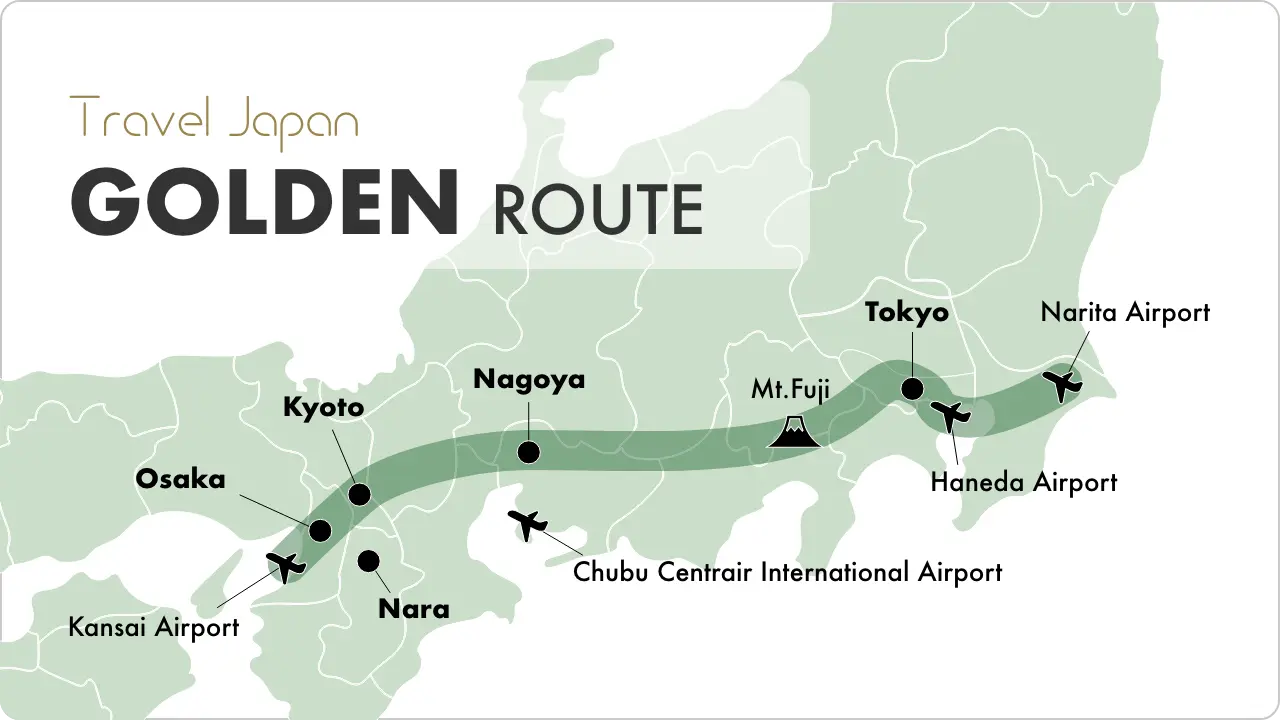
Japan isn't just trying to attract more visitors, it's trying to spread them out. Under its latest tourism strategy, the government is investing billions of yen in overtourism countermeasures, regional tourism initiatives, and infrastructure improvements while encouraging travelers to venture beyond its major cities and into lesser-visited prefectures, according to The Japan Times.
It’s important to note that the goal on behalf of local governments and tourism boards isn’t to stop people from coming — it’s to change how we move across the map.
The Odyssey Effect
Which brings us back to Christopher Nolan’s adaptation of The Odyssey, which, if anything, is a gorgeous opportunity for travelers to follow a completely different script.
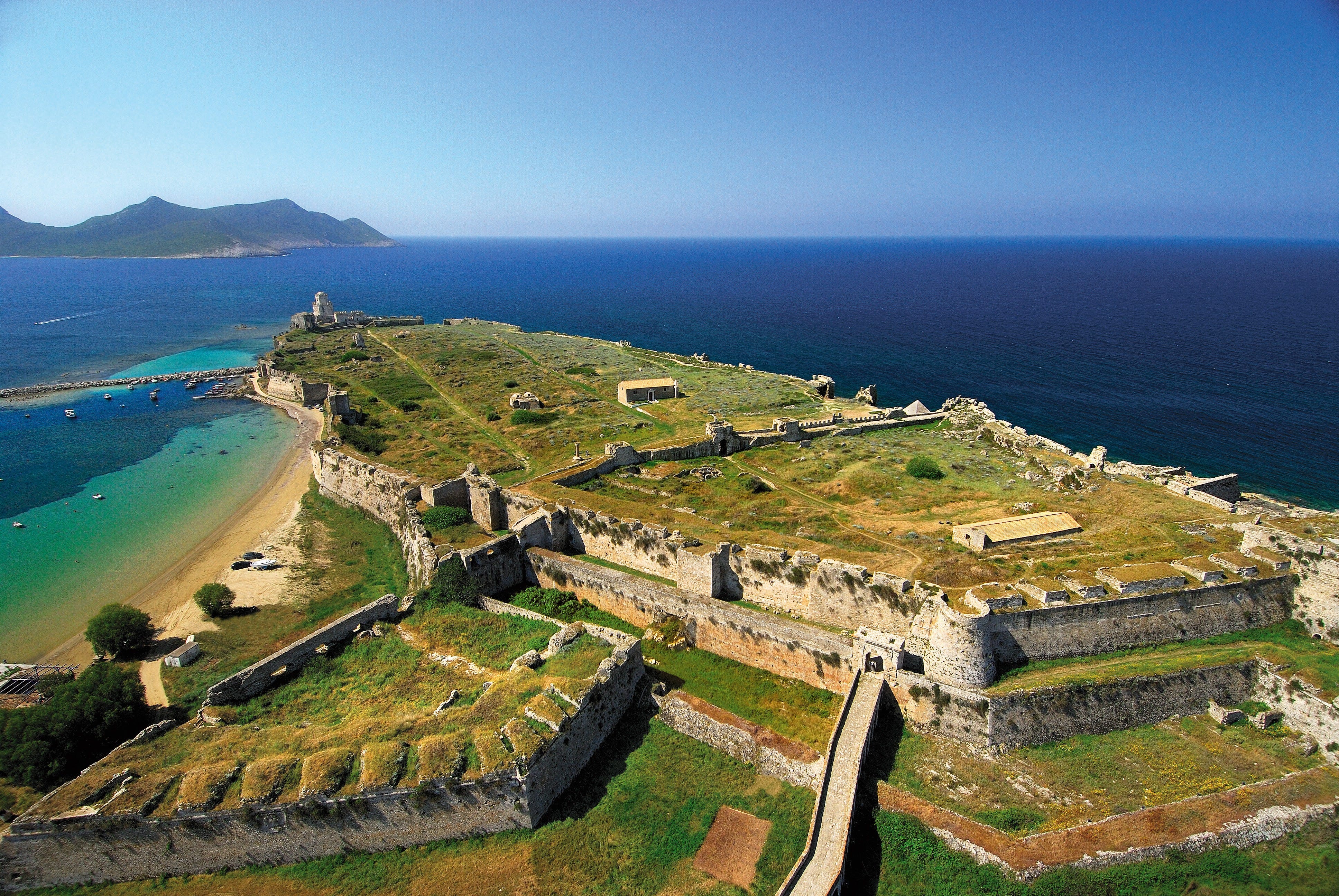
Unlike its predecessors, The Odyssey doesn’t send us to a single famous beach or viewpoint. It takes us across an entire region. Following Odysseus means island-hopping to lesser known locales aka the Peloponnese, exploring forgotten ruins, and embracing the detours.
Maybe that’s just one more reason why Christopher Nolan’s adaptation feels so timely. When so much of travel today seems to be dictated by algorithms, bucket lists, and overcrowded beaches that now require a reservation, The Odyssey a different path that’s built around curiosity, detours, and the willingness to go beyond and embrace the unknown.
There’s no way I could’ve known that hopping on that bus with a backpack and a $22 ticket in 2005 that I’d be experiencing a version of Dubrovnik before Hollywood and before the crowds changed it forever.
But that’s exactly the kind of feeling (and travel) I hope The Odyssey inspires in all of us in the years ahead.
In Other News:
🎬 Being John Malkovich...in Croatia
Croatia’s latest tourism campaign isn’t really an ad, it’s a short film. Starring John Malkovich and produced by 45-time Emmy winner Pete Radovich, it’s another sign that destination marketing is moving away from glossy brochures and toward Hollywood-style storytelling. If my theory in today’s newsletter is right, expect more tourism boards to start chasing scripts instead of slogans.
🌍 Before your next international trip...
The U.S. State Department has issued a rare worldwide caution for American travelers, urging increased vigilance overseas amid heightened security concerns. If you haven’t already, now’s a good time to enroll for free in the Smart Traveler Enrollment Program (STEP)—one of those boring travel tips you’ll be very glad you followed if something goes sideways.
🔊 Good vibrations
The world's first 4D sound resort has opened beneath Costa Rica's Arenal Volcano. At The Vessyl, guests don't just hear immersive soundscapes—they feel them too, thanks to low-frequency vibrations transmitted through a custom floating floor. Consider me all ears.
💺 The seat debate never dies
Just when I thought I’d escaped the great airplane seat discourse, The New Yorker has entered the chat. Their latest essay revisits the eternal question: is reclining your seat an inalienable right, or the aviation equivalent of cutting in line? Unsurprisingly, people have feelings.
✈️ Better together
World of Hyatt and Air Canada’s Aeroplan have teamed up, allowing members to link accounts and redeem points for everything from Hyatt free-night awards to Air Canada flight rewards, with additional perks for elite members.

Every week, I’ll share a few things that I’m slightly obsessed with. Nothing’s off limits, and everything’s on the table. These are NOT sponsored links, just straight-up tips or recommendations about the things I love. Here’s one thing I’m slightly obsessed with this week.
☕☕☕☕☕ Five cups of coffee a day keeps the heart doctor away. According to the American Heart Association, five cups of caffeinated coffee a day (about 400 mg of caffeine) is considered safe for most adults and may even be linked to a lower risk of heart disease, stroke, and heart failure. Consider this my official excuse to mainline flat whites while I casually forward this story to everyone who's ever told me I need to cut back on caffeine.
If you liked this story, you might also enjoy:


Overcrowded anything is not my thing! I wonder if other countries will follow in Japan and Croatia's footsteps?
I am adding that coffee is also great for your liver :)
Thanks for the shout out! I haven’t seen the Odyssey yet, but imagining that it will inspire travelers to follow in Odysseus’s footsteps seems a bit ironic, considering that he was just trying to go home 😂